Growing Climate Resiliency with Nature: The Case of Medellín, Colombia
By Kat Mackinnon
Growing Climate Resiliency with Nature: The Case of Medellín, Colombia
As challenging as sustainability resolutions may feel, there are global examples of successful initiatives. Medellin, Colombia is a model for how much progress can be achieved over a relatively short period of time. While miles apart, both Medellin and Florida are popular tourist destinations known for beautiful landscapes in tropical, humid locations. As a result, we face many of the same environmental concerns and can learn from their experiences.
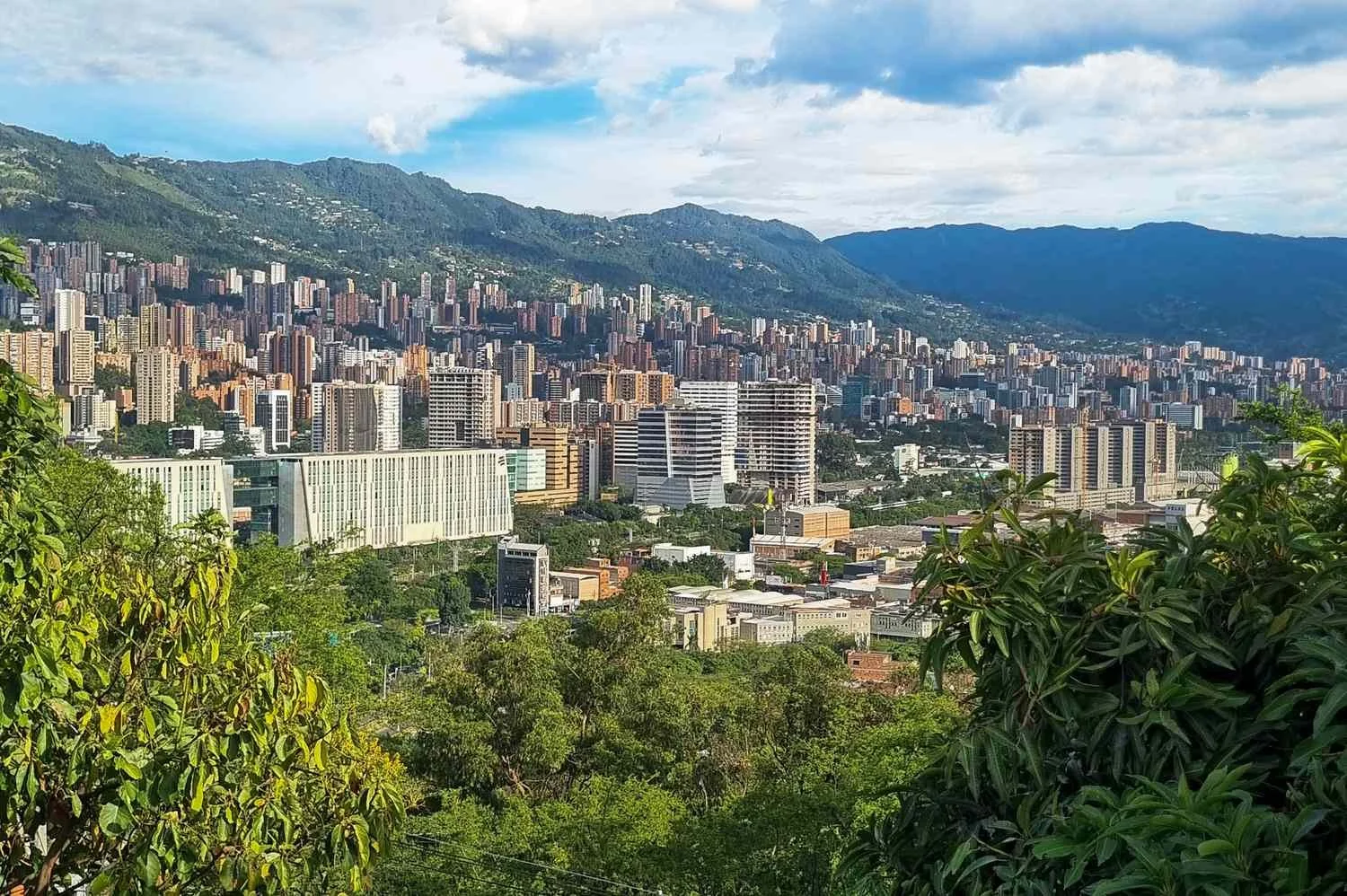
Panoramic of the Valle de Aburrá (Aburrá Valley) and the city of Medellín, Colombia.Credit: Ivan Camilo Cardenas/Getty Images
What Happened in Medellin, Colombia?
The “green corridors” program began in 2016 due to concerns of air pollution and rising temperatures (1). The city had been experiencing what is known as the “urban heat island effect,” which occurs due to the use of materials like concrete that are inefficient at absorbing heat coupled with the lack of vegetation that would otherwise provide a cooling effect. This results in trapped heat which heightens the local temperature and is associated with an increased risk of heat-related illness (2). In addition to health hazards from heat, air pollution in the city reached a peak, measuring three times the WHO guidelines for safe limits (1).
The Green Corridors Program
The project established more than thirty corridors along roadways, gardens, streams, and parks with the intention of connecting green spaces throughout the city. By 2021, more than two million individual plants had been planted, adding trees and shade throughout the city (1). Trees and shrubs reduce heat through a process called evapotranspiration in which water absorbed by the roots then evaporates through the leaves. This mechanism results in a cooling effect, leading to an average 1.6 degrees Fahrenheit temperature reduction in urban green spaces versus spaces without vegetation. Green spaces also absorb rainfall, reducing stormwater run-off, and filtering pollutants from the water (3). The native trees used for this program were selected for qualities best suited to the needs of the city. For example, the mango tree was a species chosen for its capacity to filter air pollution and survive in zones of high pollution (1).
Project Outcomes
The outcomes of this project have been substantial. In some areas, the temperature reduced by more than 5 degrees Fahrenheit with an overall average temperature drop of 3.6 degrees Fahrenheit. Additionally, wildlife monitoring efforts have reported the return of native animals to the area, including parrots, opossums, bats, insects, and frogs, which had not been seen in the city for years. Locals report this may help keep pests, like insects and rats, under control, since their natural predators have also returned to the city (1).
Additionally, the local government of Medellin supports citizen participation in decision making by allowing them to decide which projects receive funding. In recent years, the community has elected to fund many green initiatives. Locals have even volunteered their time to maintain the green corridors as gardeners, acting as environmental stewards to the land. This project demonstrates how supportive measures can allow nature to recover and rebalance, and how community support is critical to success (1).
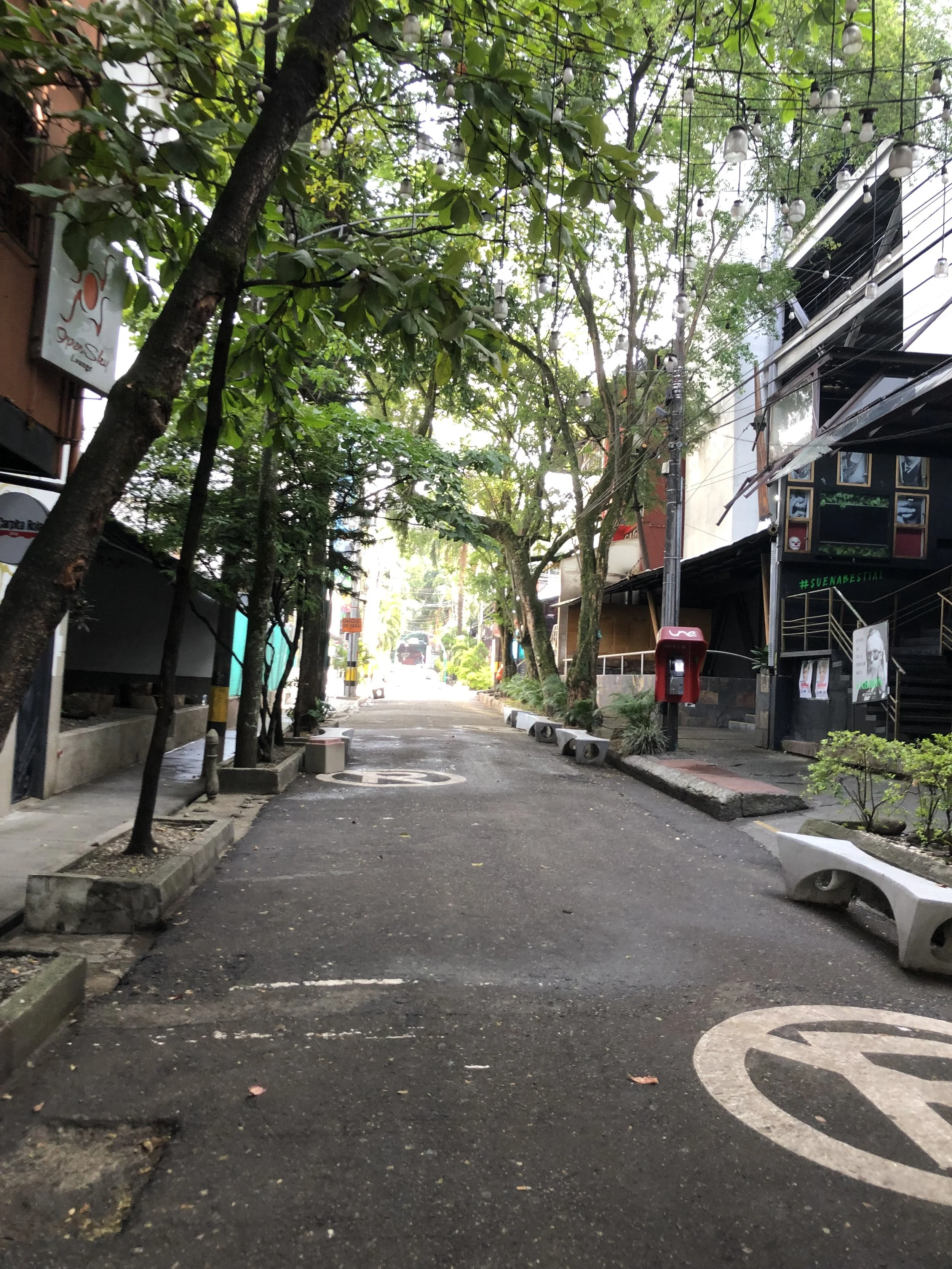
A city street in Medellín flanked by bars, restaurants, and trees on both sides. Photo by Ericka Leigh
How is the Green Corridors Program Significant to Floridians?
Florida has been experiencing record heat over the last few years, so we know what it’s like to go through temperature extremes. The solutions implemented in Medellin, Colombia can be applied elsewhere, including right here. This project functions as a model for accessible, nature-based climate resiliency strategies. Trees within cities can be a cost-effective method of reducing energy consumption from indoor cooling systems by absorbing carbon, providing shade, and lowering local outdoor temperatures (4). It’s a rare occurrence in Florida to turn off the A/C, but by utilizing nature-based solutions for the challenges that are now at our doorsteps, we can lessen the impact on the environment that we call home.
Just as the residents of Medellin, Colombia volunteered to steward the green corridors, there are opportunities to strengthen your community locally. Seek local tree planting events to participate in the establishment of more green spaces and if possible, choose a variety of native pollinator-friendly plants for your own yard. Learn more about the conservation efforts at Rosebud Continuum here: Conservation — Rosebud Continuum
References
1. Gouvea de Andrade, Matheus . How Medellin is beating the heat with green corridors. BBC. [Online] September 23, 2023. https://www.bbc.com/future/article/20230922-how-medellin-is-beating-the-heat-with-green-corridors.
2. Tong, Shilu, et al. Urban heat: an increasing threat to global health. BMJ. [Online] October 25, 2021. https://www.bmj.com/content/375/bmj.n2467.
3. EPA. Benefits of Trees and Vegetation. EPA - Heat Islands . [Online] May 27, 2025. https://www.epa.gov/heatislands/benefits-trees-and-vegetation.
4. Planting trees is a cost-effective way to reduce residential electricity consumption and abate atmospheric CO2. Huang, Jing, Echeverri, Dalia Patino and Zhang, Zhengfeng. 2024, Applied Energy.
5. UNEP. From strategy to action: How UN-REDD support has catalyzed climate action in Colombia. UN-REDD Programme. [Online] March 16, 2026. https://www.un-redd.org/post/strategy-action-how-un-redd-support-has-catalyzed-climate-action-colombia.
6. SEI. Understanding and overcoming policy. Stockholm Environment Institute . [Online] December 2024. https://www.sei.org/wp-content/uploads/pdfs/183682/understanding-and-overcoming-policy-incoherence-to-control-deforestation-in-colombia.pdf.