The Forests of Florida
By Katherine Mackinnon
From miles of scenic coastline and beach destinations to swamps and pine flatwoods, Florida is home to a varied range of ecosystems, each abundant with diverse plant and animal life. Over 4,000 species of plants are native to Florida and 369 of these species are considered endemic, meaning they can only be found here in this state (1). There are over 700 land-dwelling animals, more than 1,000 fish species, and thousands more species of invertebrates state-wide (2).
The subtropical climate of this region is perfectly suited to supporting high biodiversity, which encompasses the total variety of life within the area. While we don’t often think of Florida as sustaining forests, there are several types of forested ecosystems within the state and as urban sprawls increase, we must implement methods to conserve green spaces and protect these unique characteristics of natural Florida.
What is a Micro-Forest?
A micro-forest is a small, but dense and diverse population of native trees, bushes, and grasses. These green spaces serve as a critical habitat for pollinator species, such as insects and bats, unlike decorative landscapes. In addition, they offer a safe place for larger species like birds to forage and nest. Large areas of concrete and developed land contribute to an increase in temperature that can be diffused by the presence of a micro-forest. As micro-forests exist within a small plot, these are ideal for community spaces, providing residents with connection to the environment, a reduction in air pollution, and better temperature regulation (3).
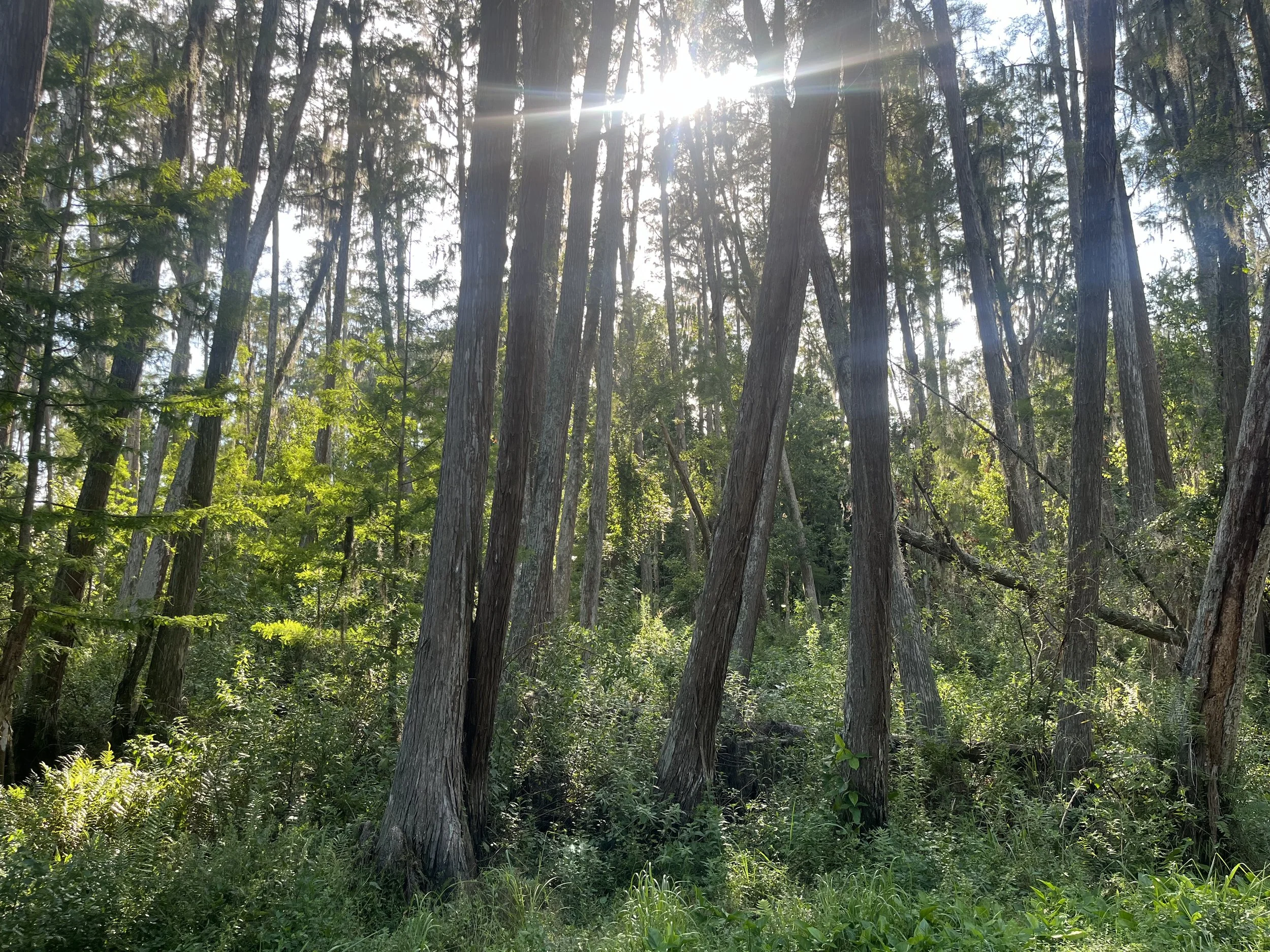
A variety of Oaks, Cypress, and Pines live symbiotically together in this micro forest. Even the fallen tree on the right side has its purpose to the larger ecosystem.
Mangrove Forests
As Floridians, we are all too familiar with weathering a storm. Along the coastlines, mangrove forests stand strong in the face of storm winds and flooding, acting as a buffer against the impacts of hurricanes. These forests prevent erosion of sand, as well as dispersing flooding and wave energy during storm events. Studies have shown that the presence of healthy mangrove forests along the coastline can reduce storm impacts up to 66% and prevent millions in infrastructure damage, demonstrating a significant need to protect this valuable ecosystem (4). There are four mangrove species found locally: red mangroves, black mangroves, white mangroves, and the buttonwood tree (5).
Red mangroves grow closest to the water and have high prop roots, which provide shelter for many fish and invertebrate species, like oysters.
Black mangroves are found at a slightly higher elevation and are identified by their pneumatophores, which are their roots growing vertically out of the sand.
White mangroves are found further inland and have a unique adaptation to saltwater in which they release excess salt from the underside of their leaves.
The Buttonwood tree is not considered a true mangrove due to its lack of visible roots, but is often found as part of a healthy mangrove forest.
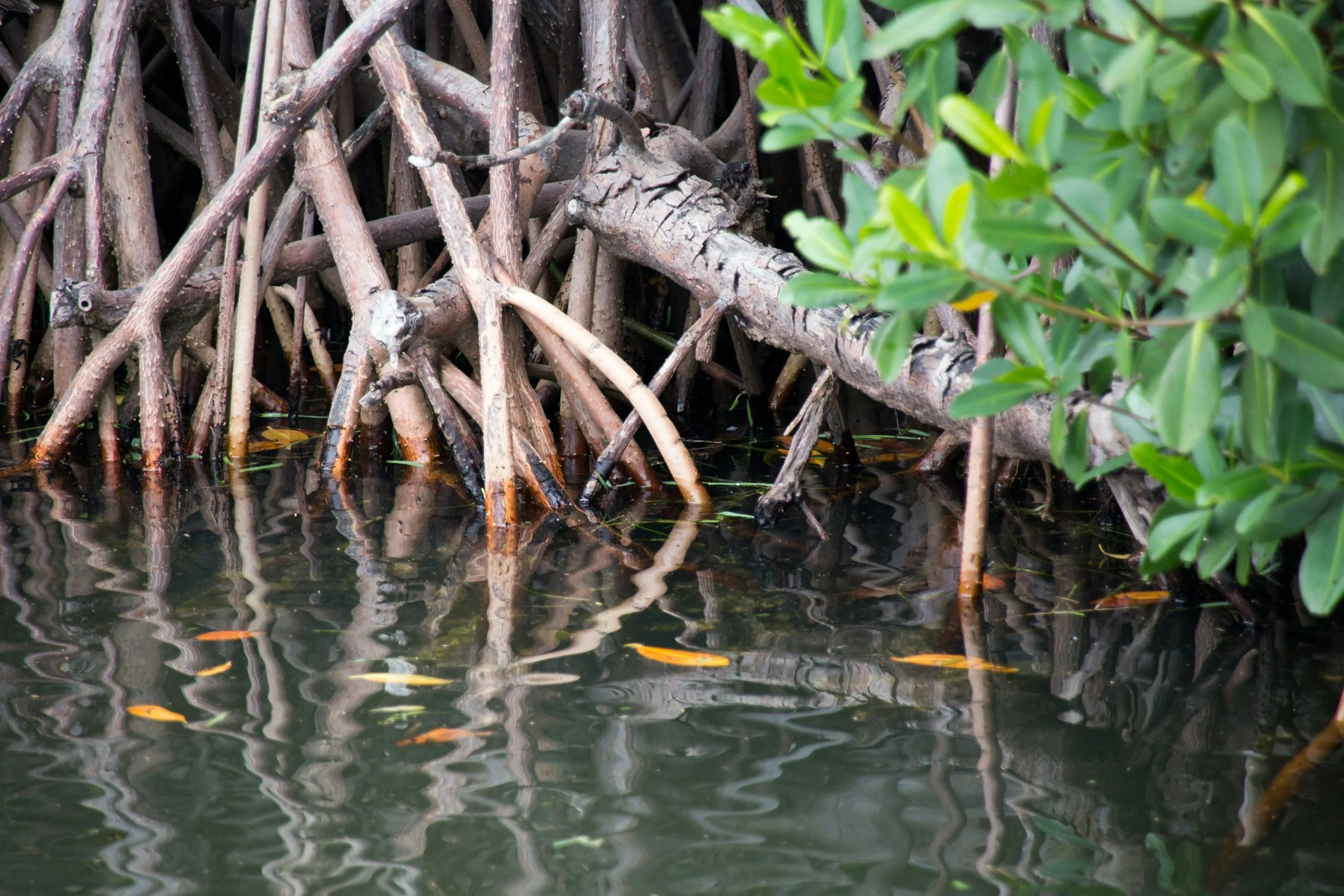
The forked root system of Mangroves.
Cypress Swamps
Cypress Swamps are another type of forest essential to Florida, dominated by bald cypress or pond cypress trees. Within Cypress Swamps, there are a multitude of native plants coexisting, like ferns and wax myrtles, as well as bromeliads and orchids growing high on the cypress trees. Cypresses grow in water within depressions in the limestone bedrock. Deeper areas of water may instead provide home to willow trees, creating a shelter for life in the swamp, including alligators and river otters (6). Cypress trees can live for hundreds of years in areas with slow-moving water and are the most flood-tolerant of Florida’s native trees. These trees provide habitat for a plethora of species, improve water quality, and slow flood waters by absorbing storm run-off (7).
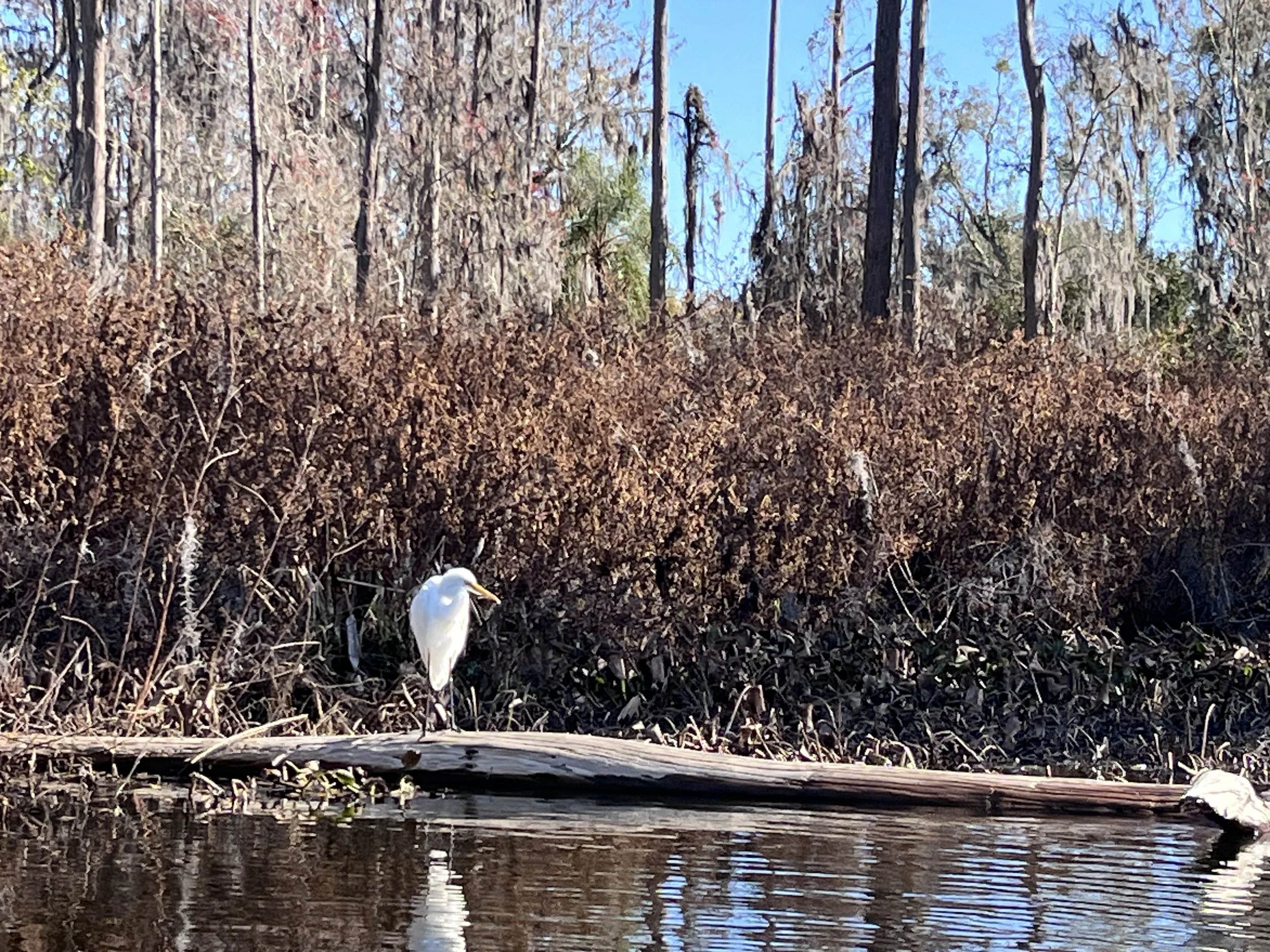
An egret rests and hunts for fish at the base of the Cypress swamp.
Hardwood Hammocks
Hardwood hammocks are temperate hardwood forests located at higher elevations and are a much drier habitat than the previously mentioned forest types (8). Temperate forests are known for moderate climates and contain both deciduous (sheds leaves annually) and evergreen (maintains leaves year round) trees.
South Florida: primarily composed of evergreen trees and home to the largest number of epiphytic (a plant that grows upon another without causing harm) ferns, bromeliads, and orchids per unit area in the continental United States (9).
North Florida: a combination of both evergreen and deciduous trees and home to the largest number of tree and shrub species per unit area within the continental United States (9).
The hammocks are characterized by tall, broad-leaved trees and high biodiversity. Well-adapted to Florida’s climate, many subtropical species can be found alongside live oaks and sabal palmettos in South Florida. This ecosystem is home to a variety of endangered plant and animal species, threatened by habitat loss and climate change, including the Florida panther (10).
Pine Flatwoods
The Pine Flatwoods are the most widespread land-based ecosystem in Florida, covering roughly fifty percent of the land area. Pine Flatwoods evolved alongside seasonal droughts, flooded soil, frequent lightning, and human-caused fire. These forests are characterized by low features and acidic soil. The vegetation is dominated by pines plus a shrub layer, composed of plants like wiregrass and saw palmetto, with few hardwoods like oaks and sweet gum trees (11). This ecosystem provides food and shelter for many species, including the threatened gopher tortoise, which serves as a keystone species meaning that it has a significant effect on the balance of its environment. The burrows of gopher tortoises offer shelter to more than 350 other species, including burrowing owls, the Eastern indigo snake, frogs, and rabbits (12).
Rosebud Continuum Sustainability Education Center
Supporting biodiversity, the Rosebud Continuum Sustainability Education Center is home to a micro-forest of native trees composed of oaks, long-leaf pine, wax myrtle, sweet bay magnolia, bald cypress, and sweet gum. The characteristics of the micro-forest align with both a Cypress Swamp, as seen around the lakeshore, and a Hardwood Hammock along the walking trail. Guests are welcome to visit the micro-forest and learn about the ongoing conservation and preservation efforts at the center. To learn more about the Rosebud Continuum Micro-Forest, follow this link to read the Forest Inventory project: Student Projects — Rosebud Continuum
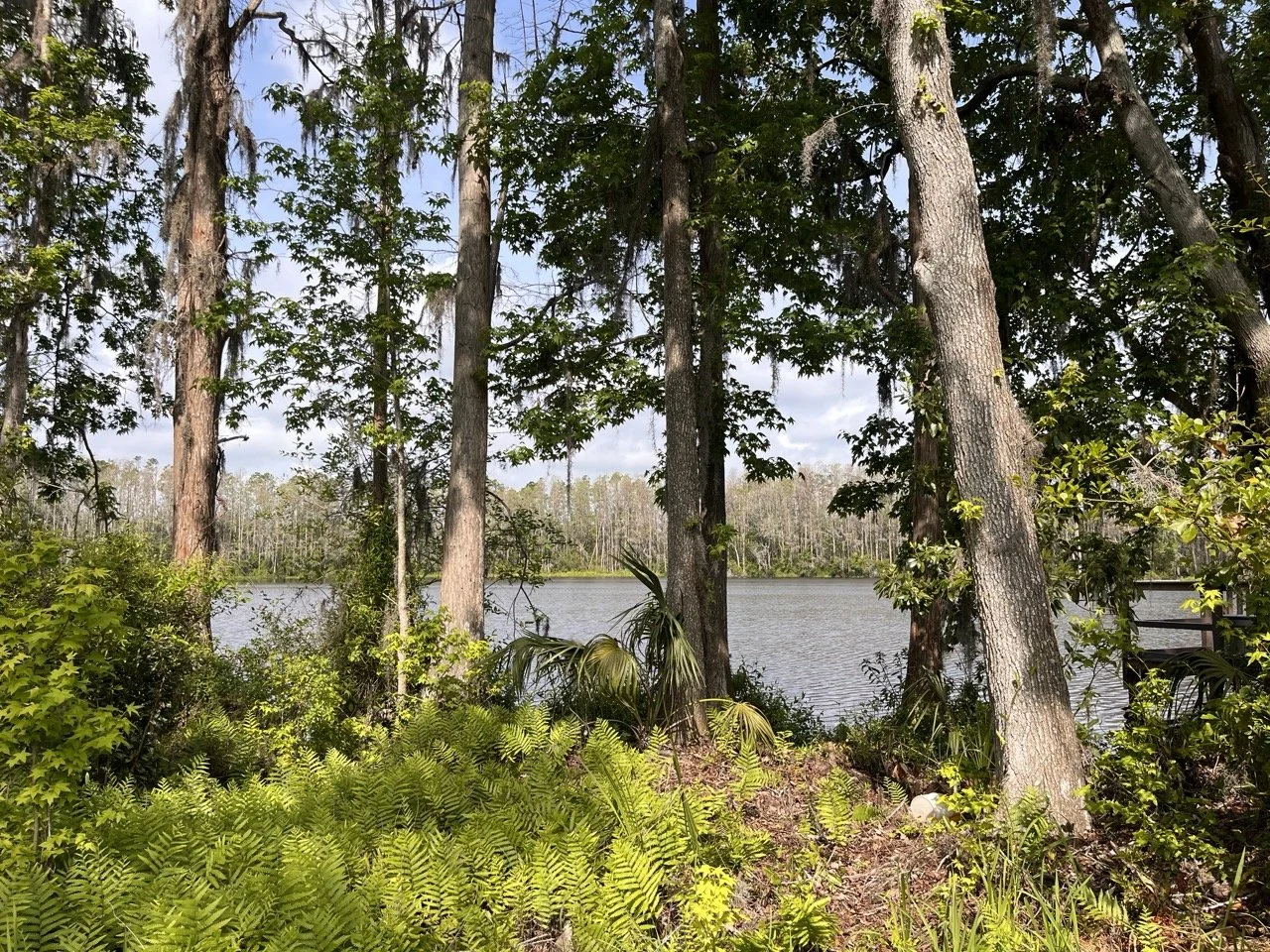
A section of our micro forest that boarders Lake Rosebud.
References
1. Johnson, Dr. Shelly. Protecting Florida’s Unique Biodiversity. UF | IFAS. [Online] April 10, 2025. https://blogs.ifas.ufl.edu/wecdept/2025/04/10/managing-for-diversity-across-floridas-unique-landscapes-biodiversity/.
2. FWC. Wildlife and Habitats. Florida Fish and Wildlife Conservation Commission. [Online] https://myfwc.com/wildlifehabitats/.
3. UW. University of Washington-Tacoma. What is a micro-forest? [Online] https://www.tacoma.uw.edu/microforest/what-micro-forest.
4. Menendez, Pelayo, et al. The Global Flood Protection Benefits of Mangroves. National Center for Biotechnology Information . [Online] March 10, 2020. https://pmc.ncbi.nlm.nih.gov/articles/PMC7064529/.
5. FWC. Mangrove Forests . Florida Fish and Wildlife Conservation Commission. [Online] https://myfwc.com/research/habitat/coastal-wetlands/mangroves/.
6. NPS. Cypress Swamps . National Park Service - Big Cypress. [Online] August 5, 2025. https://www.nps.gov/bicy/learn/education/cypress-swamps.htm.
7. UF. Florida's Cypress Trees. UF | IFAS Extention . [Online] https://sfyl.ifas.ufl.edu/natural-resources/cypress/.
8. NPS. Ecosystems: Hardwood Hammock. National Park Service - Everglades. [Online] July 28, 2015. https://www.nps.gov/ever/learn/nature/hardwoodhammock.htm.
9. UF. Temperate Hardwood Forests, Florida Land Steward . UF | IFAS Extension . [Online] August 20, 2024. https://programs.ifas.ufl.edu/florida-land-steward/forest-resources/upland-forest-ecosystems/temperate-hardwood-forests/.
10. Naturalists, FL. Hardwood Hammock. Florida Naturalists. [Online] https://www.floridanaturalists.com/hardwood-hammocks.
11. UF. Pine Flatwoods. Florida Land Steward, UF | IFAS Extention . [Online] https://programs.ifas.ufl.edu/florida-land-steward/forest-resources/upland-forest-ecosystems/pine-flatwoods/.
12. FWC. Gopher Tortoise. Florida Fish and Wildlife Conservation Commission. [Online] https://myfwc.com/wildlifehabitats/profiles/reptiles/gopher-tortoise/.